The independent appliance repair shop across Florida
Ice Maker Repair — Book a Visit Today
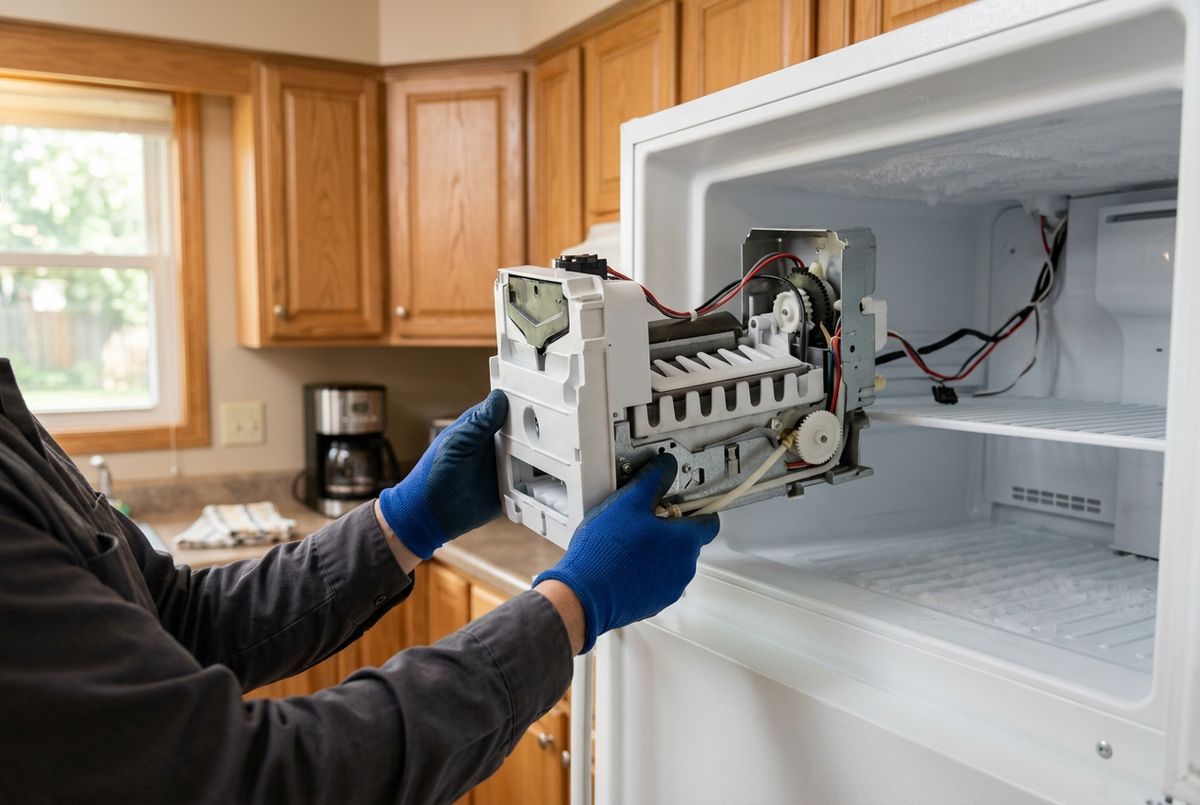
We repair refrigerator ice makers, and most of what fails is fixable. A water inlet valve stops opening, or the fill tube freezes solid, or a thermistor misreads the mold so the harvest cycle never starts. Ejector gears strip. Control boards take a hit during a summer lightning storm and never wake up. Our visit starts with the simple stuff: water pressure at the valve, line temperature, whether the mold is even getting cold. Then we test components in order instead of guessing. Florida humidity and hard water leave their own marks on these units, and we know what those look like. Call us and tell us what the bin looks like right now.
Call (800) 967-1507- Real people on the phone
- 7 days a week
- Quote in writing before any work
Taking calls until 5:00 PM ET
The ice maker symptoms we hear most
- Bin's empty and nothing's dropping Water inlet valve, a frozen fill tube, or a harvest cycle that stalled out
- Cubes are tiny, hollow, or half-formed Low water pressure, a partly clogged supply line, or a restricted filter
- Water's pooling under the freezer drawer Leaking inlet valve, misaligned fill tube, or a cracked mold
- Ice tastes stale or smells like the freezer Old water filter, slow cycling, or odors soaked up by cubes that sat too long
- Grinding sound every hour or so Stripped ejector gears, or a motor module fighting a jam
Safe things to check first
Worth a look before you call — sometimes it saves you the visit.
- 1Make sure the ice maker arm or switch hasn't been bumped into the off position.
- 2Look behind the fridge and confirm the water shutoff valve is fully open and the line isn't kinked.
- 3Check how old the water filter is, because a clogged one starves the fill cycle.
- 4Set a thermometer in the freezer and see if it's holding near zero degrees.
Guides & troubleshooting
What homeowners get from an independent shop
| C&S Appliance Repair | Big-box repair chains | Handyman listings | |
|---|---|---|---|
| You approve a written quote first | ✓ | ✕ | ✕ |
| Live answer seven days a week | ✓ | ✕ | ✓ |
| Every major brand, gas or electric | ✓ | ✓ | ✕ |
| Independent, no manufacturer quotas | ✓ | ✕ | ✓ |
| Crews familiar with homes like yours | ✓ | ✕ | ✓ |
What homeowners say after the visit
“Same-week slot, clear arrival window, text when the tech was twenty minutes out.”
Ivy N.Jacksonville, FL“The quote explained what failed and why, in plain words. I actually understood my own dishwasher for once.”
Wade F.Orlando, FL“Freezer section thawed overnight. They triaged by phone, fit us in early, and saved most of the meat.”
Opal S.Tallahassee, FLIce Maker Repair — quick answers
How long should a new ice maker take to start producing?
Give it about 24 hours after installation or after a long shutoff. The freezer has to reach temperature first. If the bin is still empty after a full day and the water line is open, something in the fill or harvest cycle needs a look.
Why did mine stop right after a thunderstorm?
Surges travel through house wiring and can knock out the control board or the module that runs the ice maker. Sometimes only that circuit dies while the rest of the fridge runs fine. We test the board and the harness before replacing anything.
Is it worth repairing or should I replace the whole fridge?
Depends on the fridge's age and what failed. A valve, thermistor, or module swap is routine work on a unit with years left. We tell you honestly what we find so you can decide, not the other way around.
My cubes smell bad. Is that a repair issue?
Usually it's the filter, or ice that sat long enough to soak up freezer odors. Dump the bin, replace the filter, and run a few cycles. If the smell comes back, we check the water line and look for a slow leak or mold in the housing.
Do you work on standalone and undercounter ice machines?
Yes. Undercounter and freestanding units use different pumps, condensers, and drain setups than a refrigerator ice maker, and we service those too. Tell us the brand and roughly where it sits when you call so we bring the right parts.
Can a bad water filter really stop ice production?
It can. A clogged filter drops pressure at the inlet valve enough that the mold barely fills, or doesn't fill at all. Small hollow cubes are usually the first sign. Filters are due about every six months in most Florida homes.
How it works
- Step 1
Tell us the noise
Describe what you see, hear, or smell. Buzzing, leaking, burning, or nothing at all. The model number helps if you can find the sticker. We'll ask a few questions and book a window that fits your day.
- Step 2
We diagnose in person
A technician comes to your kitchen or laundry room, tests the machine, and finds the part that actually failed. You'll hear what went wrong in plain words, then you decide whether repair or replacement makes better sense.
- Step 3
Repair and retest
With your approval we finish the work and run the appliance through a real cycle before we pack up. Floors get wiped and the packaging leaves with us. You also get care tips for our salt air and storms.
- A real person answers
- Open 7 days
- Written quote before work starts
Why homeowners call us
- North Florida conditionsCoastal humidity rusts drain pans, and salt air chews on dryer vents near an outside wall. Lightning surges kill control boards in the middle of a storm. We see these failures constantly, so we know which part to check first instead of guessing.
- Independent shopWe aren't tied to any manufacturer. We service refrigerators, ranges, dishwashers, washers, and dryers from most major brands, and our advice comes from what your machine needs rather than a brand sales script.
- Snowbird schedulesAn empty house hides problems. An icemaker floods in March, or a fridge quits in July and nobody knows. We do season-open checks and season-close shutdowns, and we can coordinate with a neighbor or your property manager.
- Straight answersSome machines are worth fixing and some are past it. If a repair doesn't make sense for the age and condition of your unit, we'll say so out loud, and you can put that money somewhere better.
- All major brands, gas & electricIndependent service on Whirlpool, LG, Samsung, GE, Maytag, Bosch, KitchenAid and the rest.
- Straight answersIf replacing beats repairing, you hear it from us first.
Ice Maker Repair
Small faults become big ones on a schedule of their own
Describe the symptoms and we'll book the visit — takes about a minute.
- A real person answers
- Open 7 days
- Written quotes
- All major brands
- Gas & electric
Rather not call? Get a free quote →